Paraffin Wax
Pros:
- Cost-effective
- Excellent scent throw
Cons:
- Non-renewable
- Can release toxins

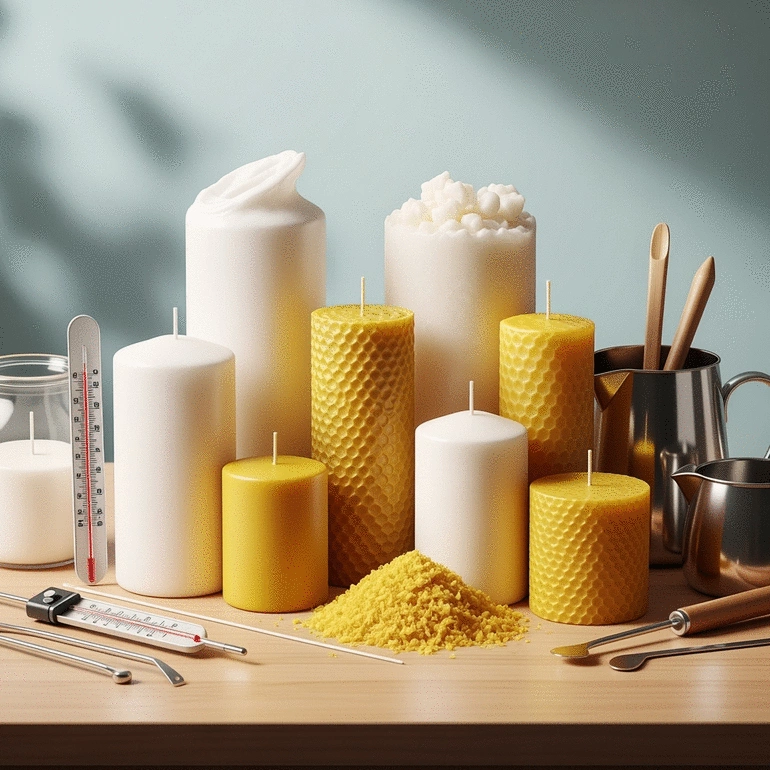
As you embark on your candle-making adventure, you might wonder: What makes each type of wax unique? Understanding the characteristics of different candle waxes can transform your crafting experience, allowing you to create candles that are not only beautiful but also align with your values. Let’s break down the essential insights you'll gain from this exploration!
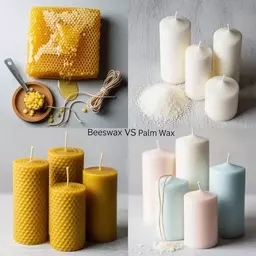
A comparative look at common candle wax types, highlighting their unique properties, pros, and cons for candle makers. If you're just starting out, a good place to begin is exploring candle making supplies for beginners.
Candle making is a delightful journey, and understanding the different types of candle wax is the first step in crafting beautiful creations. In my experience at Candle Craft Australia, I've worked with various waxes like paraffin, soy, beeswax, palm, gel, rapeseed, and blended wax. Each type carries its own unique properties, influencing everything from burn time to scent throw. Let's dive into these options!
Here’s a quick overview of the most common types:
Each wax type has its own character, which plays a significant role in the candle-making process. As you explore these options, consider what attributes are most important to you, whether it's sustainability, scent throw, or burn quality!
When choosing a candle wax, it's essential to evaluate the benefits and drawbacks of each type. This can significantly impact your crafting experience and the final product. Here’s a look at the pros and cons:
Understanding these benefits and drawbacks can help you make an informed choice about the wax that aligns with your candle-making goals, especially when considering paraffin or soy candle choices.
As a firm believer in sustainability, I’m excited to highlight some eco-friendly candle wax options that can make a positive impact. Two popular choices are soy and palm wax. Here’s why they are worth considering:
By opting for these eco-friendly alternatives, not only do we support the environment, but we also create candles that reflect our values. It’s a win-win for both the maker and the planet!
What type of wax are you most excited to try in your candle-making journey? Share your thoughts below:
As we dive deeper into the world of candle making, it's crucial to remember that the choice of candle wax plays a pivotal role in your crafting process. Each type of wax brings its own set of properties, benefits, and challenges, which can influence not just the final product, but also your overall experience as a maker. Understanding these elements can help you create candles that truly reflect your creativity and values.
For instance, if you're leaning towards sustainability, you might want to experiment with eco-friendly options like soy or palm wax. These choices not only provide beautiful results but also align with a more environmentally conscious approach to candle making. So, as you embark on your candle crafting journey, keep these considerations at the forefront!
Now that you’re equipped with essential tips on different wax types and their properties, it’s time to take action! Don’t be afraid to experiment with various waxes to discover what works best for you. Here are some steps to guide your exploration:
Remember, every candle you create is an opportunity to learn and grow. Embrace the process, and don't hesitate to try new techniques or styles. Every maker’s journey is unique, and I'm excited for you to shape yours! For more detailed guidance, consider exploring a beginner's guide to candle making.
The article discusses various types of candle wax, including paraffin, soy, beeswax, palm, gel, rapeseed, and blended wax, each with unique characteristics.
Understanding the pros and cons helps you make informed choices for your candle-making projects, impacting factors like cost, burn time, scent throw, and environmental considerations.
Soy wax and palm wax are highlighted as eco-friendly options. Soy wax is biodegradable and burns cleanly, while palm wax is sustainably harvested and creates unique finishes.
New candle makers are advised to start with small batches, document their processes, seek feedback, and join candle-making communities to share knowledge and experiences.
You can enhance your skills by participating in local workshops, online webinars, and candle festivals, which offer hands-on experience and opportunities to network with other artisans.
To continue enhancing your candle-making skills, here are some valuable resources I recommend. These will deepen your understanding and provide you with even more tips and tricks for working with various waxes:
These resources will not only educate you further but also foster a sense of community and support in your candle-making adventures. Don’t hesitate to dive in and explore all that’s available!
One of the best ways to enhance your skills and meet fellow candle makers is by participating in workshops and community events. These hands-on experiences can greatly enrich your understanding of candle-making techniques and allow you to learn directly from seasoned artisans. Here are some ways to get involved:
Engaging with others who share your passion can inspire you and enhance your skills. So, grab your gear, and let’s light up the candle-making community together!
Here is a quick recap of the important points discussed in the article: